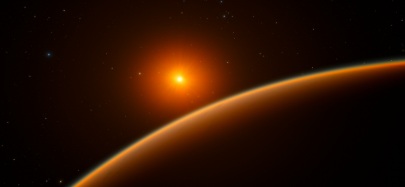
Our sun has eight planets, but only the earth has living things. There are hundreds of billions of stars in our galaxy, and each star, like our sun, should have several planets. Therefore, there should be hundreds of billions of planets in the galaxy. But the planets do not emit light, so it is not easy to find planets outside the solar system. So far, only more than 5,000 have been found. In recent days, astronomers have published articles saying that there is a planet called LHS 1140 b, which is only 48 light-years away from our earth. (It will take about 10 million years for a human spacecraft to reach this planet), in the constellation Cetus near the celestial equator, located south of Pisces. It is not a gas planet, but a solid planet like the Earth. It is about the same size as the Earth, has a good temperature, and may have water. This is the most likely non-solar planet discovered so far to have life. Everyone has been very curious since ancient times about whether humans on Earth are the only place with life alone in the universe. This LHS 1140 b really have water? Will there be life? Will it have an atmosphere? Will it have oxygen? For these super difficult problems, astronomers have to use various instruments and use spectra to observe, verify and analyze. But it is difficult. Let's wait and see!
(2024-07-11)