A close examination of Wen Tianxiang’s (文天祥) famous line, “Since ancient times, who has ever escaped death? Let my loyal heart shine in history,” reveals that while death is inevitable, the goal is to leave a lasting mark on history. The importance of “leaving a lasting mark” lies in its transcendence of death, ensuring its eternal existence. This transcendence of death, achieving certain form of “immortality,” is one of humanity’s deepest and most universal instinctual motivations, beyond that of survival and reproduction. How universal? It depends on the specific form of immortality being referred to. With a global population of eight billion, the pursuit of pure “physical immortality” is quite minimal, less than 1%. If we consider the pursuit of “immortality of the soul” after death, including religious individuals, it’s approximately 80-85%. If we define “immortality” more broadly as the desire to leave something behind to perpetuate one’s existence after death, then over 90% of humanity is pursuing it.
Immortality, as the name suggests, means avoiding mortality, eliminating death, and allowing life to continue indefinitely. Humans are living beings, and all living beings are destined to die; therefore, no one can escape death. However, we all know that humans are a highly intelligent species, and thus, as mentioned at the beginning of this article, humans try every means to avoid and transcend death. Especially in old age, they diligently exercise and widely share various health and wellness videos in various LINE chat groups with friends and family, hoping everyone will be healthy and live long lives, pushing death far away. But every now and then, in the quiet hours of the night, they will ask themselves: “Am I a temporary existence, or part of the eternal universe?” Before discussing human beings, existence, death, and immortality, we must first understand “What are we?” This brings to mind the famous French painter Paul Gauguin in 1897, when he was impoverished. Suffering from a severe illness and the devastating loss of his beloved daughter, he created this famous painting (Figure 1) in a state of extreme despair. The painting is titled “Where Do We Come From? What Are We? Where Are We Going?”, a poignant question that deeply moves the viewer. The painting depicts many figures, including a newborn baby in the lower right corner, adults picking fruit in the center, and an elderly woman nearing death, burying her face in her hands, deep in thought about her future.
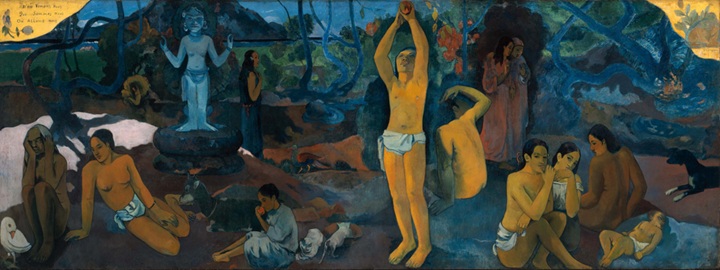
What is a human being?: For five thousand years, humans have explored this profound question from many different angles.
- Theological perspective: Man is God’s creation (Bible Genesis 1:27).
- Taoism: Human beings are a naturally flowing part of the Tao.
- Ancient Egyptian beliefs: In addition to the physical body, human beings also have many spiritual aspects.
- Astronomical perspective: The atoms that make up our bodies come from stars that are more ancient than the earth; when we leave, they will not disappear, but will return to the universe and exist forever, which is “eternal life”.
- Biological perspective: Humans are a type of primate that evolved over billions of years on earth. The original atoms in a baby’s body will be constantly eliminated and replaced with new ones as it grows, and in the end, there will be very few original atoms left.
- Philosophical perspective: Humans are rational animals, different from other species. Humans have “self-awareness”, are imaginative, can think about the meaning of “existence”, and are also aware of death.
- Artistic perspective: human life process – infancy, adulthood, old age, death.
Why most people are afraid of death: In fact, not everyone is afraid of death. Are people who want to commit suicide afraid of death? Most people with suicidal tendencies feel that life has no meaning, not worth of living, so they automatically choose death as a way out. So the fear of death is actually out of love for life. We are afraid of death because we are afraid that we will no longer exist, that we will lose consciousness, and that we will be separated from our loved ones. Human beings have a common characteristic: they have “self-awareness”, not only knowing that there is a “me”, but also that this “me” survives in a limited time. He who lives finite time actually can think about the “infinite” future, so he will inevitably ask questions: Will “consciousness” continue? Is there a “soul”? Will “memory” continue to exist? Will “self” disappear? Regarding these questions, no one has ever come back from death and can tell you with confidence what the answer is. All these uncertainties are the reason why people are so scared. Human beings long for “eternal life” to overcome all kinds of “fear” and avoid facing “death” forever. Another reason to be afraid of death is because there are all kinds of “love” in the world and the world is inextricably linked. Because life is too beautiful, I don’t want to say goodbye to everything, and I don’t want to just “end”. The experience in the world is very precious and worth remembering, and I want to continue it endlessly. However, Greek philosophers who are proficient in logic put forward very wise and comforting words, saying, “When death exists, I do not exist; when I exist, death does not exist.” So why fear death? ”, Although most people understand this logic, they cannot do it. When we are alive, we are often afraid of the tragic ending of “dying” and “saying goodbye to everything”.
How should we face death? This is a profound question that has perplexed humanity since the dawn of time. Throughout history and across cultures, life is a process of birth, aging, sickness, and death; the process was shorter in ancient times and longer in modern times. Five thousand years ago, the ancient Egyptians, inheriting even more ancient human customs, developed a series of beliefs about death, including the existence of an “Afterlife.” They believed that humans possess several spiritual elements, such as Ka (life force), Ba (personality), Akh (soul), Ren (name), and Sheut (shadow). They believed these spiritual elements would survive under certain protection and would not disappear upon death. This protection involved mummifying the body, building a tomb, and placing burial goods including food, valuables, and treasures. Furthermore, they believed incantations from the Book of the Dead to guide the spirit into the afterlife. Therefore, for the ancient Egyptians, death was not the disappearance of everything, but a “turning point” in the cosmic order ( For other details, please see the article “The Pharaoh’s Immortality, the Mysterious Pyramids, and Astronomy).
Like the ancient Egyptians, the ancient Mesopotamians also believed in an afterlife. However, their afterlife was a dark and gloomy underworld where all the dead fled to the depths of the earth. They fed on dust and mud, wore feather-like garments, and wandered like birds in the pitch-black darkness, each one utterly desolate. Those still alive felt that “immortality” was hopeless. This complete pessimism about the afterlife led them to believe that while alive, one should “seize the day,” otherwise “it will be too late to regret.”
While the ancient Greeks accepted the Mesopotamian attitude towards death, they also progressed, developing their own unique beliefs. For example, the paths to the “afterlife” were divided into three: for heroes and virtuous people, it was a paradise-like heaven (Elysium); for most ordinary souls, it was the meadow (Asphodel Meadows). The punishment of evildoers was concentrated in another place called Tartarus. Although the Greek philosopher Socrates said that the soul is immortal and death is nothing to fear, there is a famous line in Homer’s epic poem, the Odyssey: “I would rather be a poor slave on earth than the king of the dead.” For the Greeks, the world was always better than the underworld.
In China, the Buddhist view is largely followed in which people believe that humans possess a soul and are subject to reincarnation. The souls of good people can return to the mortal world, be reborn, and become another person. The souls of bad people return to the mortal world, are reborn, and become animals. This reflects the core Buddhist idea: a person is born with a soul, dies, is reborn (with a new soul), and dies again, continuously experiencing the six realms of reincarnation. To break free from this cycle of birth and death, one must fully understand the impermanent, suffering, and empty nature of the world, break free from attachment to the physical body and self, learn “no-self” and “forgetting oneself,” and abandon the pursuit of “eternal life,” as this pursuit will cause endless suffering. Besides eliminating one’s own suffering, one must cultivate great compassion, widely benefiting all sentient beings, so that wisdom and compassion reach perfection, thus achieving Buddhahood and reaching the highest state of Nirvana, thereby permanently liberating oneself from birth and death. This is the ultimate goal of Buddhism.
Like Buddhism, Christianity also does not consider death to be the end. However, the ultimate hope of Christianity is resurrection and eternal life. “Eternal life” is connected to God, because God is eternal; He has no beginning and no end. “Eternal life” is one of the blessings God bestowed upon humankind at creation. “Eternal life” itself is not problematic, because there is no death. However, Adam and Eve disobeyed God’s command, succumbed to the serpent’s temptation, and chose to “fall” (eat the fruit of the tree of knowledge). Death, suffering, and separation from God then occurred; this is clearly described in Genesis 2:16-17 of the Christian Bible. Therefore, death is part of the fallen world. Being banished to the world and facing the pain of death at all times is a struggle for humanity. However, God, in His mercy, instructs believers that “eternal life” must be built upon a “relationship” with God; union with God, participation in divine life, spiritual revival, and being in His presence. God provided a practical way: He sent His only Son, Jesus, to earth. Anyone who believes in Jesus Christ will attain “eternal life.” This declaration of “whoever believes in me will have eternal life” is recorded in John 3:16. And the world of “eternal life” is not a void sky, but the coming of the “new heaven and new earth” (Revelation 21:1-4).
Why the Desire for Immortality (Why): Several aspects can be discussed:
- From the perspective of biological evolution: The genes of those who don’t actively desire immortality are less likely to be passed on to the next generation. The result of long-term filtering and elimination is that the gene for “desire for immortality” is constantly sharpened, passed down through generations, and gradually accumulates in the genes of future generations, making “desire for immortality” increasingly a fundamental human characteristic.
- Psychological factors: There is an extreme fear of “non-existence,” hence the desire for immortality.
- In human consciousness, life needs meaning to feel fulfilled. If life is short and finite, and everything becomes “nothingness” after death, then what is the meaning of “existence”? What is the meaning of “the pursuit of wisdom”? What is the meaning of “the advancement of civilization”? “Immortality” is not for survival, but for meaning.
- Human beings’ attachment to the world, their unwillingness for all the love and connections they have in this world to be extinguished.
- The belief that humans possess a soul, an afterlife, and rebirth, regardless of its veracity, inspires countless people in their pursuit of immortality.
- Significant technological advancements have led many to believe that these advancements can offer substantial assistance in certain areas, not in the elusive realm of spiritual immortality, but rather in the immortality of personal information. For example, AI can create digital twins that can see, hear, and engage in real-time conversations.
What kind of “immortality” does humanity crave?? From the law of conservation of mass-energy in physics, we know that every atom that once lived in our bodies will not be destroyed, even after death. This guarantees immortality. Therefore, this isn’t an item for which humanity seeks for immortality. Items that people seek for immortality are those things that might disappear with death, such as “living,” “self-awareness,” “memory,” and “soul.” People try every means to prevent these things from disappearing. For example, to prevent “living” from disappearing, both the body and soul must live on indefinitely (e.g., the ancient “Qin Shi Huang” type; the modern “Putin” type, belonging to biological immortality). This is one type. Another is to let death occur naturally, but to see death as merely a “turning point.” The body can be “mummified” or decay, but the soul must be “immortal” (e.g., the ancient Egyptian pharaohs’ practice of mummification; the Christian approach of allowing the body to decay). There are also various other “symbolic” forms of immortality:
- Having children and grandchildren, continuing the family line.
- Legacy: Writing books, scientific papers, composing songs, creating artwork, erecting monuments, establishing companies, making scientific inventions, and setting up institutions.
- Remembering You: Photos, videos, family trees, grave marks, and memorials to be remembered by family, friends, and community.
- History: Seeking fame or lasting influence.
- Immortality through religious beliefs, such as heaven, resurrection, reincarnation, or eternal souls, to survive death.
- Digital immortality: preserving photos, videos, text, and AI avatars; engaging in dialogue with simulations of deceased individuals.
- Utilizing advanced biological and pharmacological technologies to resist aging and directly extend lifespan. Or using cryonics to preserve the body for future use.
- Achieving some form of immortality indirectly through charitable donations to buildings or foundations.
- Spiritual immortality: religious faith (Christianity’s communion with God, Buddhism, Taoism, etc.).
- Immortality through impact: becoming a teacher, helping others, or serving society.
In order to face death and even transcend it, most of us have done more or less of the above-mentioned “symbolic” acts of immortality (perhaps unconsciously). However, death is not limited to humans; even the “stars” in the sky will eventually die because their “oil lamp runs out” (i.e., they run out of fuel).
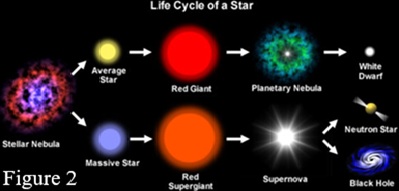
The Death of Stars : Our understanding of the universe has advanced by leaps and bounds over the past century. The Big Bang, expansion, dark matter, and dark energy have all been revealed. However, what makes physicists blush is that we know nothing about dark matter and dark energy, which make up 95% of the universe, except that they do not emit or reflect light and only interact through gravity. Stars, which emit light and are visible to us, account for only 5% of the universe. Don’t underestimate this 5%; the total number of stars in the universe is approximately 1022, a number about a hundred billion times larger than the total number of all living and dead humans, 1011; a hundred billion is an astonishing number. Stars can be categorized into seven classes according to their masses, from largest to smallest: O, B, A, F, G, K, and M. Our Sun belongs to class G. It’s important to understand that stars with fuel will eventually run out. This is similar to the inevitable death of living beings. Figure 2 shows the state of a star in its old age when its fuel is exhausted (small stars of classes K and M burn slowly; these stars have lifespans longer than the universe, so they won’t be discussed further).
- Mid-sized stars (Class G): Their burning rate isn’t very fast, with a lifespan of about 10 billion years. They follow the path shown at the top of the diagram: their death isn’t a process in which the all the fuel burned up and then the cooling, dimming, and everything disappears. Instead, their outer layers become recycled stardust, and their inner layers become white dwarfs. White dwarfs can roam the universe for over 10¹² years.
- Large stars (O, B, A, F): Their burning rate is fast, with a lifespan of several million to several hundred million years. They follow the path shown at the bottom of the diagram: their death isn’t disappearance either. Instead, their inner layers can’t withstand the immense gravity and the burning stops at iron. The fusion of iron doesn’t release energy but consumes it, causing the inner layers to collapse into a “city-sized” neutron star or black hole before exploding, ejecting the outer layers as a super-bright supernova which becomes recycling stardust. Neutron stars and black holes can roam the universe for over 1030-1040 years.
This process illustrates that the death of a star is not “disillusionment” or “the end,” but rather the beginning of another, more permanent form of existence—stars with lifespans of billions of years transform into white dwarfs that can exist for at least trillions of years; and the existence of neutron stars and black holes is even more incredibly long-lasting. “Death is the beginning of another, more permanent form of existence”—this is a profound realization, a mystery revealed by the universe. If this is true for stars, what about humans, who also belong to the universe?
In what more permanent form does a person exist after death? : Several perspectives can be used to explore this more permanent form:
- From a scientific perspective, all the atoms in a person’s body, although constantly being replaced throughout life, do not disappear after death but exist eternally in the universe. However, human memory, personality, and consciousness, as we currently know, depend on brain function. When the brain permanently ceases to function, scientists cannot prove that these three things will continue to operate. Therefore, a person’s body constituents continue to exist, but whether individual consciousness continues in a more permanent form is still unproven and inconclusive.
- From the perspective of the pharaohs of ancient Egypt’s pyramid era, death was merely a turning point. The soul ascended to heaven, uniting with the stars, or transforming into a star—this was the path to immortality. This process required several steps: rituals, mummification, incantations, offerings, and then passing a judgment after death. Therefore, the ancient Egyptians’ concept of immortality primarily referred to ascending to the celestial realm filled with stars.
- From a religious perspective (including Christianity, Buddhism, and Hinduism), humans possess a soul; the physical body can die, but the soul is immortal. Christianity emphasizes the same soul, resurrection, and ultimately, union with God, which is unrelated to the celestial realm of stars, and immortality is merely a byproduct. Buddhism views the soul not as eternally unchanging, but as subject to reincarnation, ultimately transcending reincarnation to achieve Nirvana. Hinduism believes in an eternal self, with the soul reincarnating and ultimately merging with the universe.
- From a philosophical perspective, what you truly leave behind after death is your influence, your works, and your image (in the memories of others).
- From an AI perspective, all your information, including voice, images, text, emails, diaries, thought patterns, etc., can be digitized into a Digital Double, essentially a digital twin of that person. Besides being “visually present,” it can also utilize AI capabilities to engage in real-time dialogue with the living; from a visual and auditory perspective, the Digital Double is like a “living person.” If digital technology can exist forever, then a “virtual you” that can be seen, interacted with in real time, and is alive will also exist forever.
The chart below simply compares these viewpoints:
| Viewpoint | What can last forever? | Core Idea |
| Mass-Energy Conservation Immortality | Matter and Energy | The atoms and energy that make up the body do not disappear but continue to circulate in the universe. |
| Biological Immortality | Physical Body | 透Life is extended through medicine, genetic engineering, organ replacement, and other technologies, even eliminating aging. |
| Pharaonic Immortality | Soul and Identity | 死After death, one ascends to the heavens, joining the gods and stars, continuing the existence of a king. |
| Biblical Immortality | Personality and Spiritual Life | The physical body dies, but one gains eternal life in God and ultimately experiences resurrection. The stars are symbols of eternal glory, not immortality itself.. |
| Philosophical Immortality | Influence, Works, Image. | Philosophers accept that death is inevitable; however, some things can transcend death |
| Virtual Immortality | Digital Double | The physical body dies, but the virtual person continues to live in the digital world. |
Conclusion: Humanity’s desire for “immortality” stems from a profound questioning of the meaning of existence. The desire for “immortality” is understandable when facing the fear of death. This article offers a multi-dimensional analysis of “immortality”: physics, biology, AI, the Pharaoh’s pyramids, and the Bible. It attempts to answer the question, “After death, what is truly immortal?” Physics reveals the continuation of matter; biology pursues the continuation of the body; religion yearns for the continuation of life; the Pharaohs pursued the continuation of identity; AI pursues the continuation of digital double. Ultimately, this “I” cannot disappear, therefore, we need “spiritual immortality”—my soul will live on forever. We need “biological immortality”—my genes will continue to exist. We need “cultural immortality”—my works will continue. We need “social immortality”—I will be remembered. We need “digital immortality”—my information will continue. We may not be able to determine the extent to which these things will achieve immortality, but we are certain that every atom in our bodies comes from a universe older than humanity and will continue to exist forever. Although civilization has progressed into the 21st century, humanity’s profound inquiry into the meaning of “immortality” and “existence” will continue forever. (2026-06-13 New Jersey).